
Track 03 · Web Development
Next.js Web Development
Fast, accessible, type-safe web apps — from landing pages to AI-powered SaaS front-ends. Production-grade from day one.
production sites shipped for clients across LATAM and the US
average Lighthouse performance score across shipped projects
TTFB on Next.js apps deployed on edge runtimes
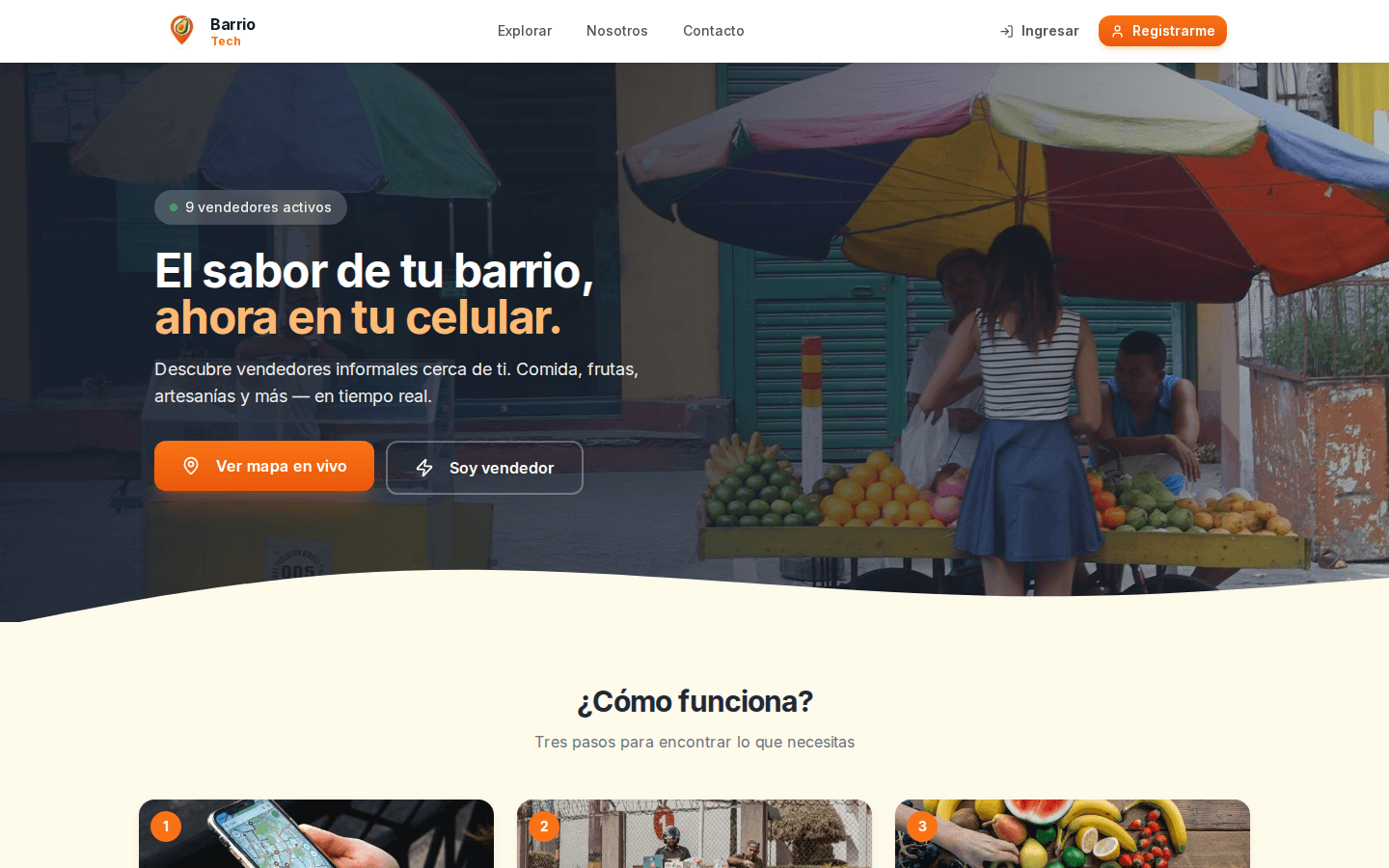
Featured case
BarrioTech · live in production
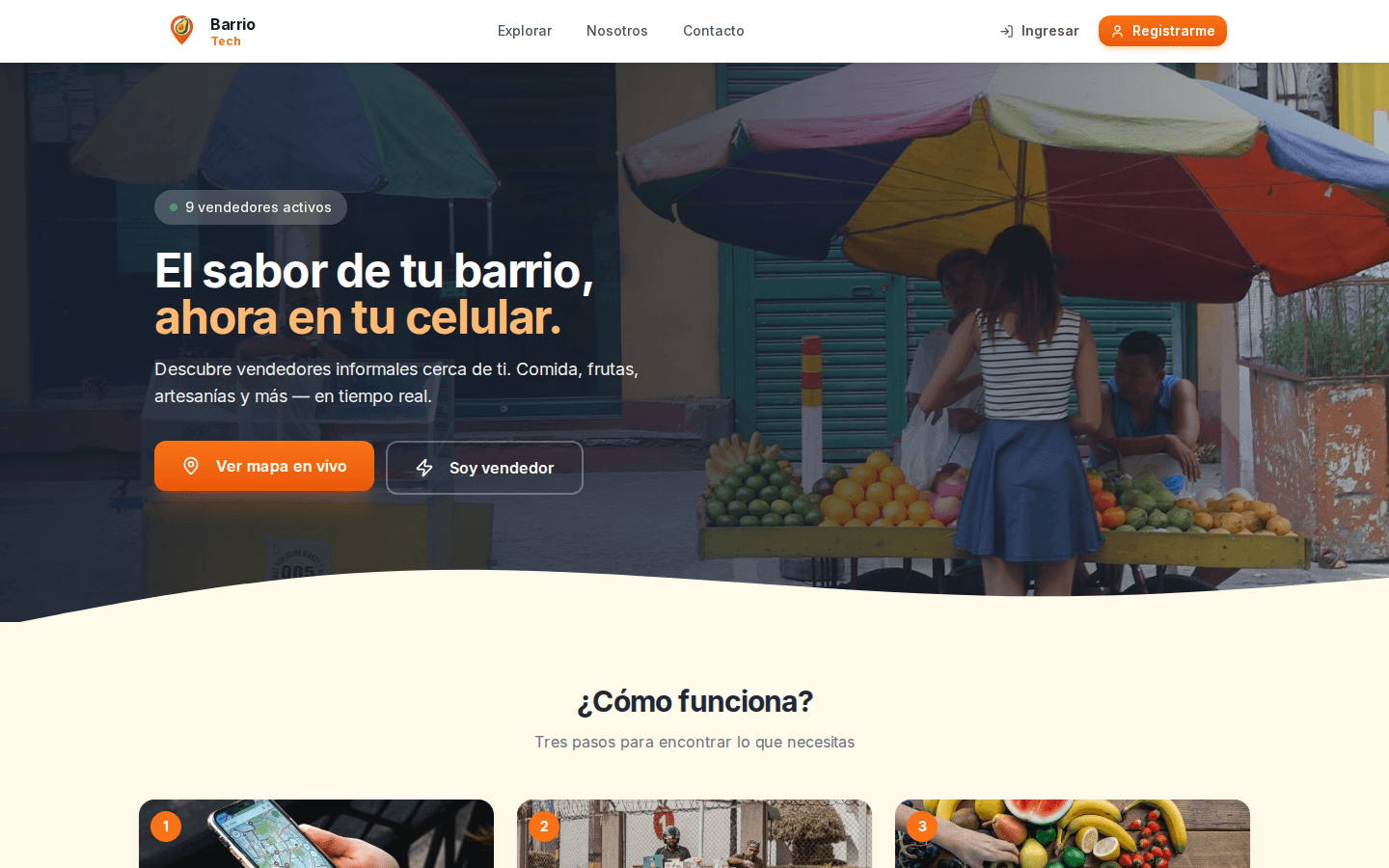
A live GPS platform for street sellers in Cali — geolocation, product catalog, and admin dashboard, built end to end with Next.js, PostgreSQL and Prisma.
See the full case study →What I build
Next.js & React
Server-rendered React with the App Router, React Server Components, route handlers and edge functions. Production-grade performance, not just demos.
Landing Pages
High-converting marketing pages with fast first paint, sharp copy, and CTAs wired to your CRM, email tool, or analytics stack.
Dashboards & Web Apps
Authenticated admin tools and dashboards with role-based access, tables, charts, and CSV/PDF exports. Built to scale beyond the first 100 users.
AI-Powered Features
Chat interfaces, agents, and tool-calling flows wired to OpenAI, Claude, or open-source models via streaming APIs.
Headless CMS Integration
Decoupled WordPress + Next.js, Sanity, Strapi, or Notion as your back office. Editors keep working; the front end stays fast.
Performance & SEO
Core Web Vitals in the green, structured data, sitemap, robots.txt and hreflang — the work that makes the site findable and fast on real networks.
How I work
Five steps, every project. The same rhythm whether the deliverable is a landing page or a full SaaS front-end.
Product, not brochure
I treat websites like products, not brochures. Performance, accessibility and SEO are baked in from the first commit — bolted on later is expensive.
Type-safe end-to-end
Type-safe end to end: TypeScript on the front end, validated payloads on every API route. Fewer runtime surprises, faster refactors.
Small reversible PRs
Ship in small, reversible PRs. Staging URLs on every push, analytics on every page, and rollback strategy before there’s a problem.
Data model first
I design the data model first. Forms, API routes and types stay in sync, which means features move fast and bugs stay rare.
Read before rewrite
When there’s existing code, I read it before I touch it. Refactors earn their place; rewrites don’t happen on a hunch.
My stack
- Next.js 14 (App Router, Server Components, Route Handlers)
- React 18+
- TypeScript
- Tailwind CSS
- PostgreSQL + Prisma / Drizzle
- NextAuth / Clerk
- OpenAI / Anthropic / Ollama APIs
- Vercel / Docker / self-hosted VPS

Ready to scale without the chaos?
Stop doing by hand what AI can do in seconds. Let's map your first workflow on a 30-min call.
Book a free strategy call